
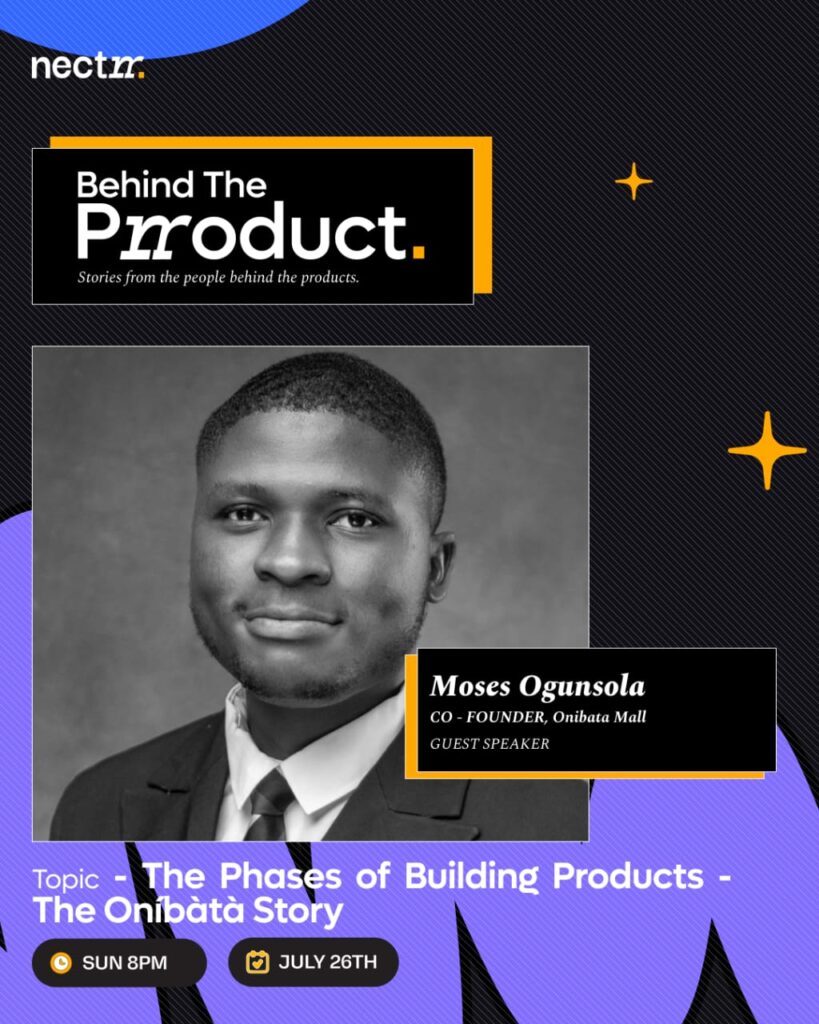
We sat down with Moses Ogunsola, co-founder of Oníbàtà Mall, to talk about the story behind the product, and honestly, it's one of those startup stories that doesn't start with a grand plan. It starts with a guy noticing something small and just acting on it.
Moses was learning shoemaking in Ibadan back in 2019. He noticed the shoemaker had a shop full of finished shoes but barely any customers. Most of the money was coming from repairs, not the actual shoes sitting on the shelf. So he took a few pictures and put them on his WhatsApp status. Sold out in a week.
That's it. That's how Oníbàtà started.
It wasn't about tech, it was about visibilityWhat Moses realized from that one experiment was that the talent and the products were already there. Nigerian shoemakers were making good stuff. What they didn't have was a way to actually get in front of buyers. So along with his co-founders Dotun and Vincent, he built Oníbàtà to close that gap.
They launched in 2020, right in the middle of COVID. Started small, working with a few shoemakers. But as demand picked up, they ran into a problem nobody warned them about: a lot of the vendors just weren't ready for this. No good product photos. Trouble communicating online. At some point the Oníbàtà team was literally going to vendors' shops to take pictures for them.
They were basically trying to fix the whole value chain by themselves. That doesn't scale.
So they cut back instead of pushing forwardInstead of trying to onboard everyone, they narrowed things down to brands that already had their stuff together, decent photos, consistent quality, could actually fulfill orders. It felt like shrinking the vision, but it's what made the business work. A few months later, Oníbàtà got featured through the Forbes Accelerator.
Moses' takeaway from this part of the journey: you don't always grow by adding more. Sometimes growing means figuring out what to cut.
The website isn't the businessThere was a phase where the team got a bit too caught up in how the platform looked. Wanting it to feel like a "real" tech company, polished, impressive. But Moses eventually realized Oníbàtà isn't a tech company selling shoes, it's a business that uses tech to make things easier. The website is just a tool, not the product itself.
They actually proved this by accident. The site went down for a redesign at one point, and sales kept coming in anyway. The business survived without a perfect website. It wouldn't survive without customers.
Trust matters more than people thinkWhen someone buys from a brand they've never heard of, there's always that hesitation. Will this actually show up, will it look like the photo, is this even real? Oníbàtà ended up playing that trust role between customer and maker. That's part of why people keep coming back and referring friends. The goal stopped being just "make a sale" and became "make a customer who comes back."
What's next: going beyond individual customersNow Oníbàtà is working on something called Box Sales, basically a B2B version where businesses can source Nigerian-made products in bulk instead of chasing down individual suppliers one by one. It's a shift from being just a marketplace to being more like a distribution platform for Nigerian brands.
And the long-term goal is bigger than Nigeria. Moses wants Nigerian-made products reaching customers internationally, not just locally.
The real lesson in all thisLooking at how Oníbàtà evolved, from a shoemaker's shop, to a marketplace, to a curated platform, to now eyeing B2B and export, it's clear this wasn't a straight line. Every version came from something the last one taught them.
Moses didn't try to build something global on day one. He solved one small, real problem first. Then kept building from there.
Back in 2019 the question was: what if people could actually see these shoes?
Now it's: what if the world could see what Nigerian brands can make?
That's where Oníbàtà is headed next, and it's the story we explored with Moses Ogunsola on Behind the Product by nectrr.